Everything parents need to know before their baby's first flight
Planning your first family trip is an exciting milestone, but if you're travelling with a newborn or young baby for the first time, it’s perfectly natural to have questions. From navigating the airport to keeping your little one comfortable during the flight, there’s a lot of new things to think about.
The good news is that flying with a baby is often easier than many parents expect. In this guide, we'll walk you through everything you need to know before take-off, from age requirements and passports to airport preparation and in-flight tips.
In this guide:
- How old does a baby have to be to fly?
- Does a baby need a passport?
- Can you book a flight for an unborn baby?
- Preparing for your baby’s first flight
- Before you fly
- Tips for flying with a baby
- FAQs
- Travel with confidence
How old does a baby have to be to fly?
There is currently no universal minimum age for flying, but most airlines allow healthy, full-term babies to travel from around 7 to 14 days old.
Some airlines may allow babies to travel even younger (a few days old), while others may require medical clearance for newborns under a certain age. For example, if your baby was born prematurely or has any health concerns, it's always best to seek advice from your GP or trusted healthcare professional before travelling.
It's also worth considering the practicalities of travelling during those early weeks. Feeding, changing and sleep schedules can feel unpredictable at first, and every baby adjusts differently. While some parents feel ready to travel with a newborn right away, others prefer to wait until they’re more comfortable with their new routine. Ultimately, the right time to fly will depend on your baby's needs, your family's circumstances and your travel plans.
Does a baby need a passport?
Yes, babies of any age still need a passport to travel abroad. When applying for your baby's first passport, you'll need:
- A completed application - online or by post
- Passport photographs that meet current requirements
- Supporting documents confirming your baby's identity (including their birth certificate)
- Information from parents or legal guardians
Passport processing times can vary throughout the year, particularly during busy holiday periods. HM Passport Office advises that you'll usually receive a passport within three weeks of your application being processed, but it may take longer if additional information or documents are needed.
If you need a passport more urgently, HM Passport Office also offers a Fast Track service for first child passports, with passports typically delivered within one week of the appointment. Find out more about applying for your child’s first passport.
Do babies need passports for travel in the UK?
For domestic flights within the UK, including Northern Ireland, babies and young children do not usually need a passport. However, identification requirements vary between airlines, and the adult travelling with the child may be asked to provide photographic ID and confirm the child's identity.
For journeys within the Common Travel Area (the UK, Republic of Ireland, Isle of Man, Jersey and Guernsey), passport requirements can also vary depending on nationality and the airline you're travelling with.
Before travelling, always check directly with your airline to confirm which documents you'll need for your journey.
Can you book a flight for an unborn baby?
Many expectant parents begin planning holidays or trips to visit family before their baby arrives. However, most airlines need a baby’s full name and date of birth before a ticket can be issued.
Some airlines allow bookings to be amended after birth, but others may require separate arrangements once your baby has arrived. Before making a booking, check directly with your airline to understand their specific policies.
It's also worth remembering that your baby will need their own passport for international travel. If you're planning a trip shortly after your due date, you’ll need to allow enough time for birth registration, passport applications, and any other travel documentation.
Preparing for your baby’s first flight
Whether you’re wondering what to pack or how to soothe your baby on a plane, these practical tips can help you feel more confident ahead of your trip.
Before you fly

1. Navigating airport security
Most airports allow parents to carry breast milk, formula milk and baby food through security when needed for the journey.
You may be asked to present these items separately during screening, so keeping them together in an easily accessible part of your changing bag can save time at security.
If you're formula feeding, bringing more than you think you’ll need can provide peace of mind in the event of delays.
2. Packing your hand luggage
When travelling with a baby, it's always worth packing a few extra essentials. Delays can happen, and having everything you need within easy reach can make the journey much less stressful.
Consider packing:
- Plenty of nappies and wipes
- Changing mat
- Spare outfits for your baby
- A spare top for parents
- Muslins
- Formula or expressed milk
- Baby food and snacks
- Dummies or teething rings
- Favourite comforters or toys
- Any medication your baby may need
For a complete packing guide for travel abroad, take a look at our Family Holiday Checklist.
4. Choose a travel-friendly stroller
Many parents find it helpful to keep their stroller with them until boarding, making it easier to navigate the airport and keep little ones comfortable between check-in and departure.
A lightweight, easy-fold stroller can be especially useful when travelling through busy terminals or making connections. Many airlines allow parents to travel with a pushchair or stroller free of charge, although policies vary when it comes to where it can be stored during the flight.
Most airlines will ask you to hand over your stroller at the departure gate, where it will be loaded into the aircraft hold. After landing, strollers are typically returned either at the aircraft door or at the oversized baggage collection area. Procedures vary by airline and airport, so it's worth checking before you travel.
Which baby stroller is allowed in flight?
While most airlines allow parents to take a stroller through the airport and up to the departure gate, some compact travel strollers may also qualify as cabin baggage if they meet the airline's size and weight restrictions.

Before travelling, check your airline's guidance on:
- Folded dimensions
- Weight restrictions
- Cabin baggage allowances
- Gate-checking policies
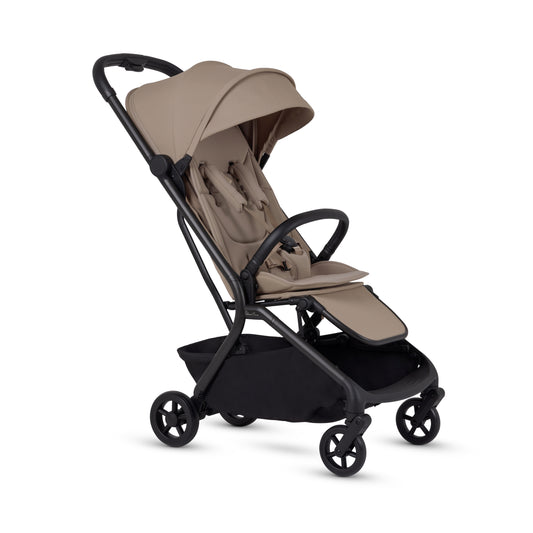
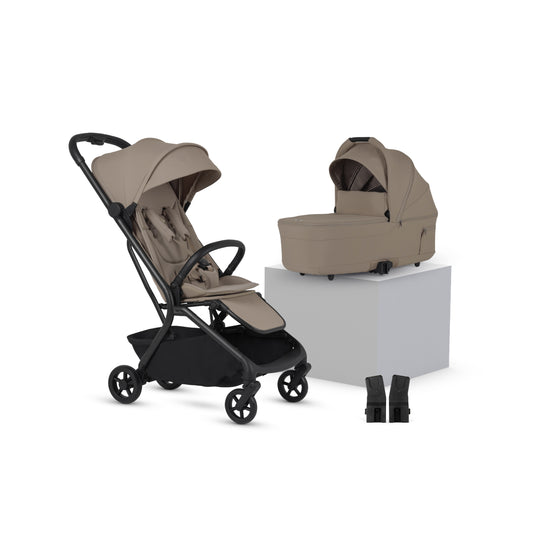
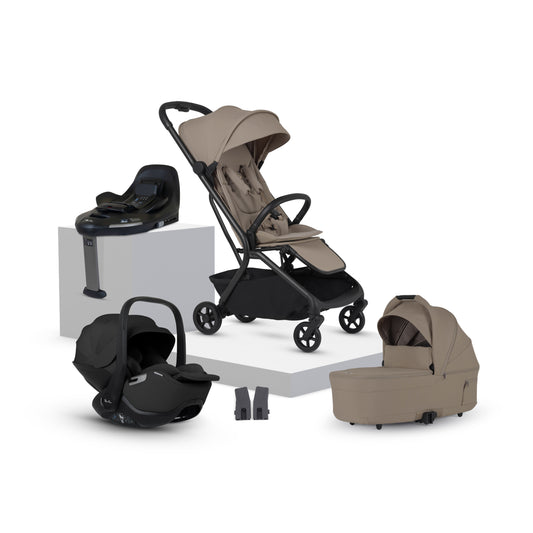
For families travelling with a newborn, a travel system with a lie-flat carrycot can be particularly useful, supporting your baby's natural posture while on the move. Travel-friendly options such as Nia combine a compact fold with a carrycot suitable from birth. Nia is the world’s first IATA cabin approved stroller in both seat and carrycot mode.
For more advice on choosing the right model for your family's adventures, explore our guide to the Best Strollers for Travelling.
4. Bring a baby carrier
A baby carrier can be particularly useful once you've handed over your stroller at the gate. It keeps your hands free for passports, boarding passes and luggage whilst providing comfort and reassurance for your little one.
Many parents also find baby carriers helpful when moving through security or navigating busy airports, particularly if their baby prefers to be close to them. If you're travelling with multiple bags or older siblings, having a carrier on hand can make the journey feel much more manageable.
5. Consider taking a car seat
If you're planning to hire a car at your destination, you may want to travel with your baby's own car seat. Many families prefer using a familiar seat that they know fits their child correctly, rather than relying on rental options abroad.
Most major airlines allow car seats to be checked free of charge, either at bag drop or the departure gate. To help protect your car seat from damage during transit, consider using a padded travel bag.
For more advice on travelling safely with babies and young children, explore our guide to Car Travel with Children.
6. Book a bassinet for long-haul flights
If you're travelling long haul, it's worth checking whether your airline offers bassinets, also known as sky cots. They attach securely to the bulkhead wall and can provide a comfortable place for newborns and younger babies to rest during the flight.
Availability is often limited and subject to age and weight restrictions, and each airline sets its own requirements. As bassinets are usually allocated on a first-come, first-served basis, it's worth requesting one as early as possible when booking your flight and confirming availability directly with your airline before you travel.
Tips for flying with a baby
1. Feeding
Feeding can be a useful way to comfort and settle your baby during a flight. If you're breastfeeding or bottle feeding, try offering a feed during take-off and landing, as the sucking and swallowing motion can help relieve pressure in your baby's ears.
If you're travelling with formula or expressed milk, cabin crew can often help with warming feeds if needed. Having feeding essentials easily accessible in your hand luggage can make things much easier once you're onboard.
2. Changing a nappy on a plane
Most commercial airplanes have baby changing facilities in at least one of the onboard toilets, although space can be limited. If you're unsure where these are located, don't hesitate to ask a member of the cabin crew once you've boarded.
Keeping a few essentials, such as nappies, wipes and a portable changing mat, easily accessible in your hand luggage can make changes quicker and less stressful. In the unlikely event that a changing table isn't available, a portable changing mat can provide a clean surface and may allow you to safely use the closed toilet lid as a temporary changing area.
It's also worth changing your baby's nappy shortly before boarding if possible, as this may reduce the need for an immediate change once you're in the air. And don't forget to pack a spare outfit for your baby – and even one for yourself – in case of any unexpected leaks or spills.
3. Protecting your baby’s ears
Many parents worry about how to protect their baby’s ears during flight. Changes in cabin pressure are most noticeable during take-off and landing, but feeding, sucking on a dummy or encouraging older babies to sip water can all help equalise pressure in the ears.
Keeping your baby awake for take-off and landing can sometimes make it easier to encourage swallowing if needed.
4. Keeping your baby comfortable

Cabin temperatures can fluctuate throughout the journey, so dressing your baby in layers makes it easier to adjust their clothing as needed. A familiar muslin, blanket or comforter can also help your baby feel more settled in unfamiliar surroundings.
5. Entertaining your little one
For older babies, changing scenery, new faces and the excitement of travelling may provide plenty of entertainment. Bringing a few favourite toys, books or sensory items can help during quieter moments.
You don't need to bring lots of toys - rotating a small selection of toys throughout the flight can help keep them interesting for longer.
6. How to soothe a crying baby on a plane
Even the most settled babies can become upset during a flight. Changes in routine, unfamiliar surroundings and cabin pressure can all contribute to fussiness, particularly during take-off and landing.
If your baby starts to cry, try offering a feed, bottle or dummy, as the sucking and swallowing motion can be both comforting and helpful for relieving ear pressure. Gentle movement can also work wonders, so if it's safe to do so and the seatbelt sign is off, try walking up and down the aisle or soothing your baby in a carrier.
Babies are highly responsive to their parents' emotions, so staying calm and reassuring can help your little one feel more secure, even if they're struggling to settle. And even though it may not feel like it in the moment, most fellow passengers are likely to be far more understanding than you think.
FAQs
What is the earliest a baby can fly?
Some airlines allow healthy newborns to fly from just a few days old, while others require babies to be at least 1 to 2 weeks old. Airline policies vary however, so always check requirements before booking.
How long should I wait to fly with my baby?
There is no universal rule, but many parents choose to wait until their baby is at least a few weeks old before flying. This can give feeding routines time to become established and allow parents to settle into life with a newborn. Ultimately, the right time will depend on your baby's health, your reason for travel and your airline's policy.
When can you fly with a baby according to the NHS?
The NHS does not set a specific minimum age for flying. Most healthy, full-term babies can travel by air after the first few weeks, although it's always worth checking your airline's policy before booking.
Before travelling, make sure your baby is up to date with any routine vaccinations they are eligible for. Depending on your destination, additional travel vaccinations may also be recommended for older babies and children. If you're planning an overseas trip, speak to your GP or practice nurse well in advance to discuss any destination-specific health advice.
If your baby was born prematurely or has a medical condition, speak to your GP or healthcare team before making travel plans.
Can a 2 month old baby travel by flight?
Yes, most healthy babies can travel safely by air at 2 months old. Many parents find this a good age to travel, as younger babies often sleep for much of the journey and are generally content being fed, cuddled and carried. Just be sure to pack plenty of essentials in your hand luggage in case of delays.
Can babies under 2 fly free?
Many airlines allow babies under the age of 2 to travel as lap infants without their own seat, although some may charge a small fee, particularly on international routes. Policies vary between airlines, so it's always worth checking before you book.

Travel with confidence
Remember, every family travels differently, and it's perfectly normal if things don't go exactly to plan. Understanding airline requirements, planning ahead and packing thoughtfully can help make the experience smoother for everyone. With a little flexibility and preparation, you'll soon find your own rhythm.
Browse more everyday parenting advice on The Edit, or get inspired for your next trip in our guide to Top Toddler-Friendly Holidays.