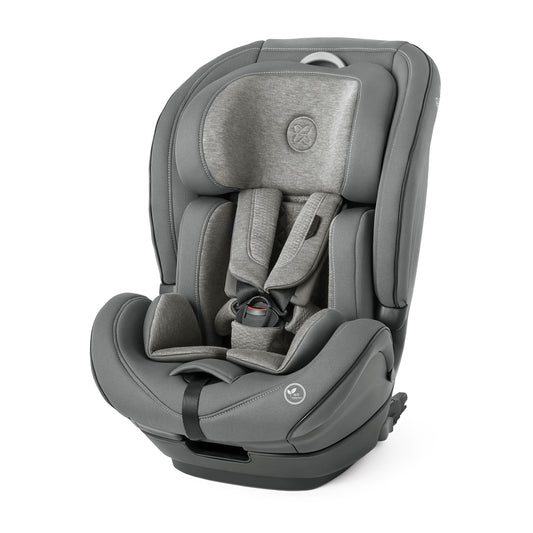
Safety, age recommendations, and more
Moving your little one from a car seat to a booster seat is an important decision. Many parents often wonder: are booster seats safe, and is my child ready?
In this guide, we explain everything you need to know about booster seats, from different types of boosters to age, height, and weight guidelines. We’ll also cover UK law on car booster seat safety so you feel confident that you’re making the right choice at every stage of your child’s journey.
What is a booster seat?
A booster seat lifts your child into a position where the car’s seatbelt sits exactly as it should - across their shoulder, chest, and hips, rather than their neck or tummy. By helping the seatbelt work as it’s designed to, a booster keeps your growing child safe, secure and comfortable every time you travel together.
Infant and toddler car seats all come with harnesses, but booster seats use the car seatbelt only, making them a more ‘grown up’ option.
Types of car booster seats

High back booster
A high back booster seat offers similar comfort to a car seat, with deep side wings, soft padding, and a supportive headrest. They also come with belt guides to keep the seatbelt perfectly positioned for the whole journey.
It’s an ideal choice for children moving on from a toddler harness car seat, offering that extra sense of security as they adjust to using the car’s seatbelt.
Backless booster
Backless booster seats are a lightweight, more portable option. They are only approved for for older, taller children who can sit upright comfortably without leaning or slouching.
What age can a child use a booster seat?
Under UK law, children can move to a car booster seat from around four years old, or when they meet the seat’s minimum requirements - typically based on weight or height.
Look out for the category of your booster seat when shopping. Weight-based R44/04 seats mean that your child must weigh at least 15kg, while height-based R129 (i-Size) booster seats require them to be 100cm tall.
Backless booster cushions can only be used by children over 125cm tall or weighing more than 22kg, as they offer less side-impact protection than high back boosters.
Every child grows at their own pace, so rather than relying on age or size alone, look for signs they’re ready. If your little one still fits their harness car seat by weight and height, it’s best to wait. Keeping them harnessed for as long as possible offers the greatest protection.
Learn more about when to move up a car seat stage.
Recommended height and weight
High back boosters are usually approved for children between 100 and 150cm in height.
- Minimum height: 100cm
- Maximum height: 150cm
To check if your child fits safely:
- The seatbelt should lie across their shoulder and hips
- Their knees should bend comfortably at the edge of the seat
Are booster seats safe?
When used correctly, booster seats are safe. High back booster seats are recommended for longer use as they offer greater protection for the head and torso.
Booster cushions are useful if your child has outgrown the backrest adjustment on the high back booster, but still requires a booster for the seatbelt to fit them safely.
At Silver Cross, every car seat is tested beyond standard safety requirements, including rigorous side-impact and dynamic testing in line with R129 (i-Size) regulations. This helps give you the reassurance and peace of mind every parent needs when travelling with their little one.
Learn more about how we test our child car seats to ensure the best possible quality and safety.
When can a child travel without a car booster seat?
Your child can travel without a booster seat once they’re tall enough for the car’s seatbelt to fit them properly. This means that the seatbelt sits across their shoulder, chest and hips, rather than their neck or stomach.
To check if your child is ready, try the five-step seatbelt test:
- They must be over 135cm in height
- They can sit all the way back against the seat.
- Their knees bend comfortably at the seat edge.
- The lap belt rests low across their hips, not their tummy.
- The shoulder belt lies flat across their shoulder and chest.
If any of these points don’t apply, it’s safest to keep using their booster seat a little longer. Growing up happens quickly, and there should be no rush when it comes to safety.
Silver Cross products for every stage

From baby’s first ride home to their first booster seat, Silver Cross offers beautifully crafted solutions for every stage:
- Discover i-Size: A high back booster seat offering superior side-impact protection, adjustable headrest, and deep padded comfort.
- Balance i-Size: Suitable from 15 months to 12 years, adapting from harnessed seat to high back booster.
- Motion 3 All Size 360: The ultimate all-in-one solution, rotating for easy access and offering comfort and safety from birth to 12 years
Final tips
Every stage of your child’s car seat journey marks a new milestone. With the right booster seat, you can travel confidently knowing they’re protected, comfortable, and secure. Remember to:
- Always install the seat according to the manufacturer’s instructions.
- Check that the seatbelt sits flat and snug (never twisted or loose).
- Avoid thick coats or snowsuits; they can affect harness and belt fit.
- Keep your child in the rear seats of the car wherever possible.
- Check if your car seat needs replacing after an accident, even if no damage is visible.
Whether it’s the school run or their first family road trip, Silver Cross is here to make every journey safer and every moment together that little bit easier.